
PIA National Names Congressman Troy Downing its Legislator of the Year — An Interview
Published September 29, 2026 at 3:11 PM · News Releases and Bulletins
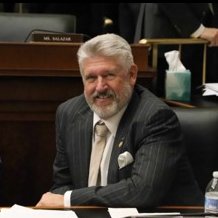
Representative Troy Downing has been named Legislator of the Year by PIA National. Downing has been very supportive of the independent agency system and introduced a bill in the House of Representatives to reinforce the McCarren-Ferguson Act of 1945 that gave the regulation of insurance to the states.
His bill, the McCarren-Ferguson Restoration Act is still in committee. Among other things, it does away with the Federal Insurance Office (FIO). PIA National CEO Mike Skiados said the PIA has been fighting for years to get Congress to eliminate the FIO and how, rather than helping, it sometimes interferes with the regulation of insurance.
“The McCarran-Ferguson Restoration Act safeguards the proven state-based system of insurance regulation by repealing the Federal Insurance Office — an unnecessary federal bureaucracy created under the 2010 Dodd-Frank Act,” Skiados noted. “For more than a century, state regulators have effectively protected both consumers and the insurance marketplace, and they remain best positioned to do so moving forward. PIA appreciates Rep. Troy Downing for his leadership and commitment to preserving the state insurance regulatory system.”
PIA Western Alliance Executive Vice President Kim Legato agrees.
“The PIA Western Alliance supports the McCarran-Ferguson Restoration Act, which reaffirms states as the primary regulators of insurance and restores the proper balance between state and federal oversight,” she told Weekly Industry News. “Eliminating the Federal Insurance Office while preserving a limited Treasury role and granting voting rights to the state-based representative on FSOC (Financial Stability Oversight Council) strengthens regulatory clarity and financial stability. We urge our members to contact their congressional representatives to advance this bill.”
Weekly Industry News Editor Gary Wolcott talked with Congressman Downing a few days after receiving the award from PIA National.
Gary Wolcott: You served as the Montana Commissioner of Securities and Insurance. As a former insurance regulator, what is your opinion of the PIA?
Congressman Downing: One of the things that I tried to do as a regulator is make sure that we were hearing from all of the stakeholders in the decisions that we made in regulating the insurance industry. We tried to be as accessible as possible and to have folks in industry that wanted to come in and talk about things that were working or that weren't.
Wolcott: What is your impression of independent insurance agents?
Downing: I think they are bringing value to consumers. You know, one of the things that always concerned me as a regulator is we start to see more and more things happening online and less and less having humans involved. Sometimes it's one thing to check a box to try to get the cheapest product you can but it’s another thing to have somebody across the desk saying, do you really understand what you're not getting with that or what you are buying or not buying?
And so having agents out there that can talk to somebody on the difference between, you know, actual cash value and replacement cost is important, and what the implications are and what you're going to be on the hook for if something doesn't work. There's so many other examples of where a normal person, you know, a layperson who just wants to buy insurance doesn't understand the implications of the decisions they're making. And I think it's important that you have agents that can answer those questions and walk them through that.
Wolcott: You have a bill in the House to do away with the Federal Office of Insurance (FIO). You believe it will pass and hopefully it will go to the Senate and be passed. I was writing about this when they first formed the FIO and I’ve always wondered how Congress got away with forming it.
Downing: First of all, I’m going to start with one obvious answer. State-based regulation works. And the fact that we have a federal insurance office, I think, creates some some ambiguity there. And if you look back at the history of when FIO was started under Dodd Frank, it was really clear that it was not supposed to be a regulator. But we had FIO out there acting like a regulator. And that was usurping the authority, or actually a better way to put that, misrepresenting the American market because FIO wasn't the American market. And they did not do a good job at representing what was working in the United States of America.
One of the frustrations I had with that is with capital standards. Rather than imposing or pushing for the capital standards in the largest, most successful insurance industry on the planet in the United States of America, there was this effort to try to bring the capital standards in our foreign markets to the US. It made no sense to me. So that was one of the things that caught my attention first.
Then under the previous (Biden) administration, where, in my opinion, they weaponized the FIO to start pushing forth on their Green New Deal aspirations, and usurping state regulator authority by doing data calls on climate risk to our domestic insurers. I'm going, okay, now we've gone too far. We've got a federal agency that is acting like a regulator, misrepresenting markets, and now usurping the authority of state regulators.
those are the reasons that really put this on my radar. I'm going, this has got to go. Then when I started going down the path of putting together legislation for this, and when I brought in the director of FIO and asked, ‘What do you guys do, why are you here?’
His first answer was, well, we managed TRIA, the terrorism risk insurance program. And I pointed out that TRIA existed before FIO and did just fine before it. So, what else do you have?
Not to throw anybody under the bus, but there was no compelling reason there.
So as we started going down the path of writing the McCarren-Ferguson Restoration Act that gets gets rid of FIO. While writing the bill, we had our stakeholder meetings and the P & C folks were happy with it. Most of the industry was happy, but there were some concerns, particularly with life companies that had international exposure.
So we worked on this bill to find a way to have an appointee under the [U.S. Department of] treasury] to deal with covered contracts and issues that they had internationally. We threaded that needle so we got the entire industry behind this bill, including, you know, the NAIC (National Association of Insurance Commissioners). It really is the voice of the American market on the regulatory side. And we've got all of the association groups from industry behind this.
I think that that's a big statement. And again, we do believe there needs to be some representation on the IAIS, the International Association of Insurance Supervisors. We also believe that there needs to be some representation on FSOC (Financial Stability Oversight Council). But it's important that on FSOC that we have the insurance industry represented there.
Wolcott: Do you think you bill will make it through the House and how do you feel about the odds in the Senate? The Senate doesn’t exactly work at anything close to light speed.
Downing: We’ve been prolific in the House Financial Services Committee. We've done a lot of good bills, a lot of good legislation has come out of there. We've gotten a lot of good bills across the House floor. Around 600, and I think close to 650 of those are still just sitting over there in the Senate and languishing.
That’s really unfortunate that we've not had as many of these picked up over there. So to answer your question, yes, I think this is something that we can get across the House floor and I'm working to do that. I am hoping that we get a markup in committee next time, that we have a markup on insurance product, our insurance policy. I think this is something we can get across the House floor.
What I'm worried about on the Senate side is this (the FIO) came under Dodd-Frank, and you're going to have senators like Elizabeth Warren probably not really happy with it. So how do we get to 60 votes over there? The NAIC is endorsed this. And the NAIC is not a political organization. It represents every one of the state and territory insurance regulators, and some of those are Republicans, some of them are Democrats. So there is boots on the ground support for this. And I'm hoping that on the Senate side, they can see this as a bipartisan solution to a problem that was artificially created.
Wolcott: In California you have Insurance Commissioner Ricardo Lara. My guess is he probably supports this. So that's in California, I don't know the name of the New York insurance commissioner but I think the powerhouses on the west coast and east coast supporting this might give some help.
Troy Downing: Talking about Ricardo Lara really quick. I was a commissioner at the same time he was, so I've worked with him in the past. Obviously, Ricardo’s politics are a little bit different than mine but we still have common ground on things. I will say in terms of the NAIC support of this because I used to sit on, we call Gerlick, the government relations leadership council (GRLC). And when we would opine, or support legislation, it happened through Gerlik. And we would not do that if there wasn't consensus support.
So that that tells me that there is consensus support on this. And again, that transcends politics, that's coming from the regulators that actually have to regulate the insurance industry in their states.
Wolcott: As a consumer it just makes more sense to me. The federal government never does anything cheaply, number one, and, two, it tends to muddle everything up. The simpler you can keep things the better. Switching subjects. Do you work well across the aisle?
Downing: Here's the deal. I want to make sure that the work that we do and the work that my staff does actually becomes law. If I can't find a Democrat co-sponsor, which I'm constantly looking for, then it's harder to get something through the Senate.
So that's something that I actively seek out.
And, once we start moving we'll start seeking out more bipartisan. But I've got a number of bills that I've gotten with Democrat co-sponsors that I've gotten across out of the committee unanimously and that have not ever received a no vote on the House floor.
I was talking about Ricardo Lara earlier. We have political differences, but there's things that we agree on. We can attack full force and hopefully get positive change going. And that's really how I see my role in Congress. It’s working on bills that I can actually get to the president's desk.