
Shoveling Snow & Your Health — When is too Old, too Old?
Published November 23, 2026 at 2:30 PM · News Releases and Bulletins
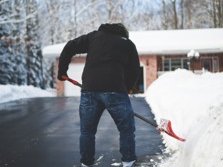
Some areas of the 10 PIA Western Alliance states have winter snows. Many areas have lots of the stuff. A huge snowfall often means someone grabbing the snow shovel and scooping snow to clear a driveway or a walkway.
While many of us view snow shoveling as a minor exercise similar to doing occasional work in the yard, it is actually not. In fact, shoveling snow can be fatal for those that do not do regular exercise or have a pre-existing heart condition.
Statistics between 1990 and 2006 released from the American Journal of Emergency Medicine cite close to 200,000 adults needing emergency room care after shoveling snow.
Over 1,600 of those patients died.
That leads to the question of how old is too old to shovel snow. Dr. John Osborne is a volunteer with the American Heart Association (AHA). He said adults 65 and up should be more “wary” of shoveling snow than those under 65.
And be “extra-mindful” if there is a high risk for heart disease like smoking, diabetes, obesity, hypertension and high cholesterol.
Dr. Osborne noted a 2025 study showing cardiovascular deaths related to cold are about double of those heat-related deaths. It runs something like 65% to 35% and men over age 65 are the people in the most danger.
Former AHA volunteer, Dr. Barry Franklin paints an even more dire picture than Dr. Osborne. He points to a study done in 2001 advising people 45 and over to be careful about shoveling snow. It found 85% of adults over 50 have some sort of condition that can lead to coronary artery disease.
Here are the AHA’s five main stressors on the heart when shoveling snow:
• Snow shoveling is mostly isometric, or static exertion contracting muscles without movement in the surrounding joints
• It requires mostly arm work that is harder on the heart than leg work
• When straining the body while lifting heaving loads (like a shovel full of snow) people tend to hold their breath and that causes the heart rate to increase and blood pressure to rise
• The lack of leg movement can cause blood to pool in the lower body causing less blood to return to the heart and be re-oxygenated
• Cold air — when compared to warm air — disproportionately constricts blood vessels that raises blood pressure and restricts coronary arteries
Dr. Franklin recommends using a snow blower instead of shoveling. Operating one raises the heart rate to an average of 120 beats per minute. Shoveling snow puts the per minute heart rate at 170.
Source link: USA TODAY — https://bit.ly/4jzfc69